Blog
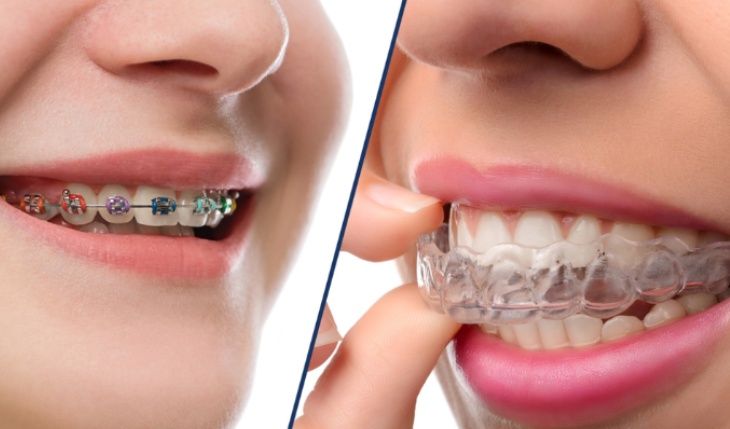
Clear Aligners vs Braces? What Most Patients Ask Me Before Straightening Their Teeth
By Dr. Thasha, BDS (Manipal)
If you’re reading this blog, chances are you’re thinking about straightening your teeth—but you’re not quite sure how. Almost every day in my practice, patients sit in front of me and ask the same question:
“Doctor… should I choose braces or clear aligners?”
Some patients are teenagers whose parents want the best option for them.
Some are working professionals who don’t want visible braces.
Some are adults who missed orthodontic treatment earlier in life and are finally ready now.
If you feel confused, unsure, or overwhelmed by choices, let me reassure you—you’re not alone. This blog is written exactly the way I explain things to my patients, calmly and honestly, so you can make a decision that feels right for you.
Let Me Start With This: There Is No “One Best Option” for Everyone
This is the first thing I always tell my patients.
Clear aligners are not always better than braces.
Braces are not outdated or inferior.
Both are excellent orthodontic treatments when used for the right case.
The best option depends on:
-
Your teeth alignment
-
Your bite
-
Your age
-
Your lifestyle
-
Your expectations
-
Your commitment to treatment
My role as a dentist is not to push you toward a trend, but to guide you toward what will work best for your smile.
Why So Many Adults Are Asking About Teeth Straightening Today
Years ago, orthodontic treatment was mostly associated with teenagers. Today, that has changed completely.
I see many adult patients who tell me:
-
“Doctor, I never had braces when I was younger.”
-
“Doctor, my teeth have shifted over time.”
-
“Doctor, I feel conscious when I smile.”
With advances in dentistry, age is no longer a barrier to straight teeth.
What Are Braces? (Simple Explanation)
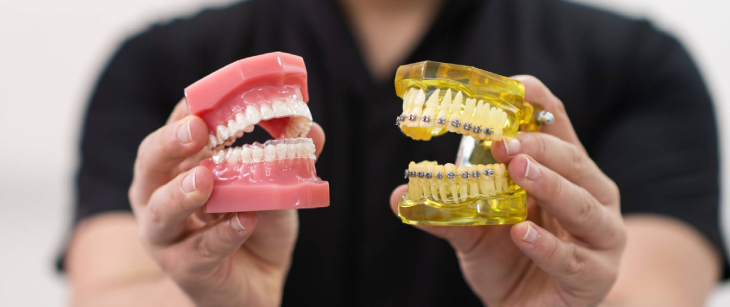
Braces are a fixed orthodontic system that uses:
-
Brackets attached to teeth
-
Wires that guide tooth movement
-
Regular adjustments over time
Types of Braces
-
Metal braces
-
Ceramic (tooth-coloured) braces
-
Self-ligating braces
Braces work continuously because they are fixed—you don’t remove them.
What Are Clear Aligners?
Clear aligners are a series of transparent, removable trays that gradually move your teeth into position.
They are:
-
Custom-made
-
Nearly invisible
-
Changed every few weeks
Patients like them because they are discreet and comfortable—but they also require discipline.
The Most Common Question: “Doctor, Which One Is Better?”
My honest answer?
👉 Neither is better. One may be more suitable for YOU.
Let’s break it down properly.
Appearance: This Is Usually the First Concern
Clear Aligners
-
Almost invisible
-
Preferred by working professionals
-
Great for people concerned about aesthetics
Braces
-
Visible (especially metal braces)
-
Ceramic braces are less noticeable
-
Some patients don’t mind visibility
If appearance is your top priority, aligners often win—but appearance alone should not decide treatment.
Comfort: What Do Patients Feel?
Braces
-
Initial soreness after adjustments
-
Brackets may irritate cheeks or lips
-
Body adapts over time
Clear Aligners
-
Generally smoother
-
Pressure is mild but consistent
-
Less irritation
Both cause temporary discomfort, which is a sign that teeth are moving.
Effectiveness: Can Both Straighten Teeth Properly?
Yes—but with conditions.
Braces Are Better For:
-
Severe crowding
-
Complex bite issues
-
Rotated or impacted teeth
-
Cases requiring strong control
Clear Aligners Are Better For:
-
Mild to moderate alignment issues
-
Spacing problems
-
Patients who can follow instructions strictly
This is where professional evaluation is critical.
Discipline: A Factor Patients Often Underestimate
This is something I stress a lot during consultations.
Clear Aligners Require Commitment
-
Must be worn 20–22 hours a day
-
Must be removed only for eating and cleaning
-
Skipping wear delays results
If aligners are not worn properly, treatment will not work as planned.
Braces Do Not Depend on Discipline
-
Fixed to teeth
-
Work continuously
-
Less patient-dependent
For teenagers or forgetful adults, braces can sometimes be the safer option.
Eating Habits: Big Lifestyle Difference
With Braces
-
Avoid hard or sticky foods
-
Food restrictions apply
-
Cleaning requires extra care
With Aligners
-
Remove trays while eating
-
No food restrictions
-
No food restrictions
Patients who enjoy flexibility often prefer aligners.
Oral Hygiene: Which Is Easier?
Aligners
-
Easier brushing and flossing
-
Lower risk of plaque build-up
-
Requires cleaning trays properly
Braces
-
More effort needed
-
More effort needed
-
Requires good technique and patience
Good hygiene is essential with both—but aligners are usually easier.
Treatment Duration: Which Is Faster?
Treatment time depends more on case complexity than appliance type.
-
Average range: 12–24 months
-
Some cases may be shorter or longer
Aligners may feel faster, but braces often deliver more predictable results in complex cases.
Speech Issues: A Common Worry
Some patients worry about speaking.
-
Aligners may cause mild lisp initially
-
Braces rarely affect speech significantly
-
Most patients adapt within days
Cost: What About Budget?
Cost varies based on:
-
Complexity of case
-
Duration
-
Type of system used
Aligners are often more expensive, but not always. A consultation is the only way to get accurate estimates.
Age: Does It Matter?
Not as much as people think.
-
Teenagers can use both
-
Adults can use both
-
Bone health matters more than age
What I Look At Before Recommending Treatment
What I Look At Before Recommending Treatment
-
Teeth alignment
-
Jaw relationship
-
Bite function
-
Lifestyle
-
Expectations
-
Commitment level
Only then do I recommend braces or aligners.
Common Myths I Hear From Patients
“Aligners are always better.”
Not true.
“Braces are outdated.”
Absolutely false.
“Aligners work without effort.”
They require discipline.
“Adults can’t wear braces.”
They absolutely can.
Life During Orthodontic Treatment
Both treatments require:
-
Patience
-
Regular visits
-
Commitment
The reward is not just straight teeth—but better function and confidence.
After Treatment: Retainers Are Non-Negotiable
This is something I emphasize strongly.
After braces or aligners:
-
Teeth want to shift back
-
Retainers hold results
Skipping retainers can undo months of treatment.
My Honest Advice to Patients
If you’re deciding between clear aligners and braces:
-
Don’t choose based on trend
-
Don’t choose based on social media
-
Choose based on professional advice
Ask questions. Understand your treatment. Be involved in the decision.
How I Help My Patients Decide
Before choosing clear aligners or braces, I take time to understand each patient. Every smile is different, and the right orthodontic treatment depends on both clinical findings and lifestyle.
During the consultation, I assess:
✓ Teeth alignment and bite position
✓ Type of tooth movement needed
✓ Gum health and oral hygiene
✓ Suitability for clear aligners or braces
I also discuss lifestyle factors:
✓ Ability to wear aligners consistently
✓ Comfort with fixed braces.
✓ Preference for discreet or fixed treatment
My goal is to guide—not pressure—patients, so they feel confident and informed throughout their orthodontic journey.
What I Want You to Know Before You Decide
If you’re still unsure whether clear aligners or braces are right for you, let me reassure you of this — there is no wrong choice when the treatment is planned correctly. What matters most is not the appliance you choose, but the guidance you receive and the commitment you bring to the process.
At Asiaa Dental Clinic JB, we take the time to understand your teeth, your bite, and your lifestyle before recommending any orthodontic treatment. Clear aligners and braces both work extremely well when they are used for the right reasons and monitored carefully. My role is to help you make a confident, informed decision — not to rush you into one.
If you’ve been thinking about straightening your teeth but have been putting it off due to confusion or fear, this is the right time to take the first step. A simple consultation at a trusted dental clinic in JB can give you clarity, direction, and peace of mind.
With the right plan, expert care, and your commitment, orthodontic treatment can truly transform not just your smile, but the way you feel about it — for years to come.
– Dr. Thasha, BDS (Manipal)
FAQs
Are clear aligners as effective as braces?
Clear aligners are very effective for mild to moderate teeth alignment issues. Braces may be more suitable for complex cases involving severe crowding or bite problems. A dental evaluation helps decide the best option.
Do clear aligners or braces hurt?
Both can cause mild discomfort initially as teeth start moving, but this usually settles within a few days. The discomfort is temporary and a normal part of orthodontic treatment.
How long does treatment take with aligners or braces?
Treatment duration depends on the complexity of the case. On average, both clear aligners and braces take between 12 to 24 months, with some cases finishing sooner or taking longer.
Which option is easier to maintain—aligners or braces?
Clear aligners are removable, making brushing and flossing easier. Braces require more careful cleaning, but both can be maintained well with proper oral hygiene and regular dental visits.
How do I know whether aligners or braces are right for me?
The right choice depends on your teeth alignment, bite condition, lifestyle, and commitment level. A consultation with a dentist helps determine which option will give you the safest and best long-term results.
Our Treatments
- Porcelain Veneers
- Composite Veneers
- Scaling and Polishing
- Teeth Whitening
- Veeners Replacement
- Consultation X ray
- Tooth Fillings
- Root Canal Treatment
- Crown and Bridges
- Dentures
- Dental implants
- Retainer and Mouth Guard
- Braces
- Wisdom Tooth removal
- Wisdom Tooth Removal Costs
- Veneer Teeth Prices
- Root Canal Prices
Accepted Cards & Wallets