Blog

Root Canal Treatment Price in Johor Bahru: 2026 Cost Guide
Looking for the root canal treatment price in Johor Bahru? Root canal treatment can help preserve a natural tooth affected by infection or inflammation inside the pulp. The cost depends on the type of tooth, the complexity of its root canals, the dentist performing the procedure and whether a dental crown or another restoration is needed afterwards.
whether a dental crown or another restoration is needed afterwards. At Asiaa Dental Clinic in Johor Bahru, patients can enquire about root canal treatment and discuss suitable options following a dental assessment. This guide explains the price difference between resident dentist and specialist treatment, factors affecting the total cost, possible additional charges and what to consider before booking an appointment.
How Much Does Root Canal Treatment Cost in Johor Bahru?
The cost of root canal treatment varies according to the tooth's condition, the complexity of the procedure and the professional providing the treatment. A routine case may require a different approach from a tooth with complex canal anatomy or a more challenging infection.
The following are the indicative price ranges supplied for this guide. Confirm the current fees and inclusions with Asiaa Dental Clinic before publication.
| Type of root canal treatment | Indicative price range |
|---|---|
| Root canal treatment by a resident dentist | RM1,000–RM2,200 |
| Root canal treatment by a specialist | RM1,800–RM3,600 |
These figures are supplied price ranges, not a guaranteed quotation for every patient. The final fee depends on the clinical assessment and the treatment required.
Before proceeding, ask whether the quoted amount includes consultation, dental X-rays, temporary fillings and the final restoration. A dental crown may be recommended after root canal treatment, depending on the tooth's remaining structure and clinical condition, and may incur an additional charge.
What Is the Difference Between Resident Dentist and Specialist Root Canal Treatment?
Root canal treatment may be performed by a general dental practitioner or a dentist with specialist training in endodontics. The appropriate provider depends on the condition of the tooth and the complexity of the procedure.
Root Canal Treatment by a Resident Dentist
The supplied indicative price range for root canal treatment by a resident dentist is RM1,000–RM2,200.
A general dental practitioner may manage many routine root canal cases, depending on their training, experience and clinical assessment. Treatment involves removing affected pulp tissue, cleaning and disinfecting the root canals, and sealing them to help prevent reinfection.
The final cost depends on the type of tooth, its root canal anatomy, the condition being treated and any additional procedures required.
Root Canal Treatment by a Specialist
The supplied indicative price range for root canal treatment by a specialist is RM1,800–RM3,600.
A dentist with specialist training in endodontics may be appropriate for selected complex cases. These can include teeth with difficult canal anatomy, certain retreatment cases or other clinical challenges that require advanced expertise.
The higher price range does not mean that every patient needs specialist treatment. Your dentist can explain whether a routine approach is suitable or whether referral to a specialist would be beneficial.
When comparing quotations, ask who will perform the procedure, what the fee covers and whether additional restoration costs apply.
What Factors Affect Root Canal Treatment Price in Johor Bahru?
Several factors can influence the total cost of root canal treatment.
1. Type of Tooth Being Treated
Front teeth, premolars and molars have different root canal structures. Front teeth commonly have simpler anatomy, while molars often have multiple roots or canals that can require more detailed treatment.
The actual complexity varies from tooth to tooth, so the price should be based on the clinical findings rather than tooth type alone.
2. Complexity of the Root Canals
Narrow, curved or unusually shaped canals may require additional time and technical care. Previous treatment, calcified canals or other anatomical challenges can also influence the treatment plan.
Your dentist can explain the findings from the examination and dental imaging before providing an estimate.
3. Severity of Infection or Pulp Damage
Deep tooth decay, cracks, trauma or repeated dental procedures can affect the pulp inside a tooth. The dentist will assess the extent of the problem and determine whether root canal treatment is appropriate.
Some cases may require additional procedures or multiple appointments, which can affect the overall fee.
4. Dental X-Rays and Consultation
Dental X-rays help the dentist assess the roots and surrounding tissues. Additional imaging may be recommended when clinically necessary.
Ask whether the consultation and required diagnostic imaging are included in the quoted price or charged separately.
5. Final Filling or Dental Crown
After root canal treatment, the tooth needs an appropriate final restoration. Depending on the remaining tooth structure, the dentist may recommend a filling, an onlay or a dental crown.
A crown may be particularly useful for protecting a weakened tooth from fracture. However, the most suitable restoration depends on the individual case.
Always request an estimate covering both the root canal procedure and the recommended final restoration.
Root Canal Treatment Cost vs Dental Crown Cost
Root canal treatment addresses the damaged or infected tissue inside the tooth. A dental crown is a restoration that covers and protects a tooth when clinically indicated.
| Treatment component | Purpose | Cost consideration |
|---|---|---|
| Dental examination | Assesses the tooth and symptoms | May be charged separately |
| Root canal treatment | Cleans, disinfects and seals the root canals | Depends on tooth type and complexity |
| Temporary filling | Protects the tooth between treatment stages when required | Confirm whether included |
| Final filling or restoration | Restores the tooth's shape and function | Depends on the restoration selected |
| Dental crown | Covers and protects a tooth when recommended | May be charged separately |
These services may be included in different treatment packages. Do not assume that the root canal treatment price represents the complete cost of restoring the tooth.
Ask your dentist for an itemised treatment estimate before starting.
When Might You Need Root Canal Treatment?
Root canal treatment may be recommended when the pulp inside a tooth becomes irreversibly inflamed or infected. This can occur because of deep tooth decay, dental trauma, cracks or repeated dental procedures.
Possible symptoms include:
-
Persistent toothache.
-
Sensitivity to hot or cold that lingers.
-
Pain when biting or chewing.
-
Swelling or tenderness around the affected tooth.
-
A pimple-like swelling on the gum.
-
Tooth discolouration associated with pulp damage.
Some teeth with pulp damage may not cause obvious symptoms. A dental examination and appropriate imaging are necessary to determine the cause and identify suitable treatment.
These symptoms do not automatically mean that root canal treatment is required. Your dentist will assess the tooth and discuss the available options.
Seek prompt dental care if you experience worsening tooth pain or swelling. Difficulty breathing or swallowing, or rapidly spreading facial swelling, requires urgent medical assessment.
What Happens During Root Canal Treatment?
Understanding the treatment process can help you prepare for your appointment.
Step 1: Examination and Diagnosis
-
The dentist reviews your symptoms, examines the affected tooth and may take dental X-rays to assess the roots and surrounding structures.
Step 3: Cleaning the Root Canals
-
The dentist accesses the inside of the tooth, removes the affected pulp tissue and cleans and disinfects the root canal system.
-
Once the canals have been prepared and cleaned, they are filled and sealed to help prevent reinfection.
-
The tooth is restored with a suitable filling, onlay or crown, depending on the remaining tooth structure and the dentist's recommendation.
-
Some cases can be completed in one appointment, while others require multiple visits. The number of appointments depends on the tooth's condition and treatment complexity.
-
Follow your dentist's instructions.
-
Avoid putting excessive pressure on the tooth until the recommended final restoration is completed.
-
Take prescribed medication as directed.
-
Maintain regular brushing and interdental cleaning.
-
Attend follow-up appointments when advised.
-
Contact your dentist if pain worsens, swelling develops or a temporary filling becomes loose.
-
Is the quotation for treatment by a resident dentist or a specialist?
-
Does the price include consultation and dental X-rays?
-
How many appointments are expected for my case?
-
Is a temporary filling included?
-
Will I need a final filling, onlay or dental crown?
-
Are the final restoration and follow-up visits charged separately?
-
What is the total estimated cost of completing treatment?
Step 4: Filling and Sealing
Step 5: Final Restoration
Is Root Canal Treatment Better Than Tooth Extraction?
Root canal treatment aims to preserve a natural tooth that might otherwise need to be removed. Whether it is suitable depends on the amount of remaining tooth structure, the condition of the roots and surrounding tissues, and the likelihood of successfully restoring the tooth.
| Consideration | Root canal treatment | Tooth extraction |
|---|---|---|
| Main purpose | Treats the inside of the tooth while preserving it | Removes the affected tooth |
| Natural tooth | Retained if treatment and restoration are successful | Removed |
| Additional treatment | A filling, onlay or crown may be needed | Tooth replacement may be considered |
| Cost considerations | Root canal treatment plus the required restoration | Extraction and any planned replacement |
Neither option is appropriate for every case. A severely damaged or unrestorable tooth may require extraction. Your dentist can explain the benefits, limitations and expected costs of the available options.
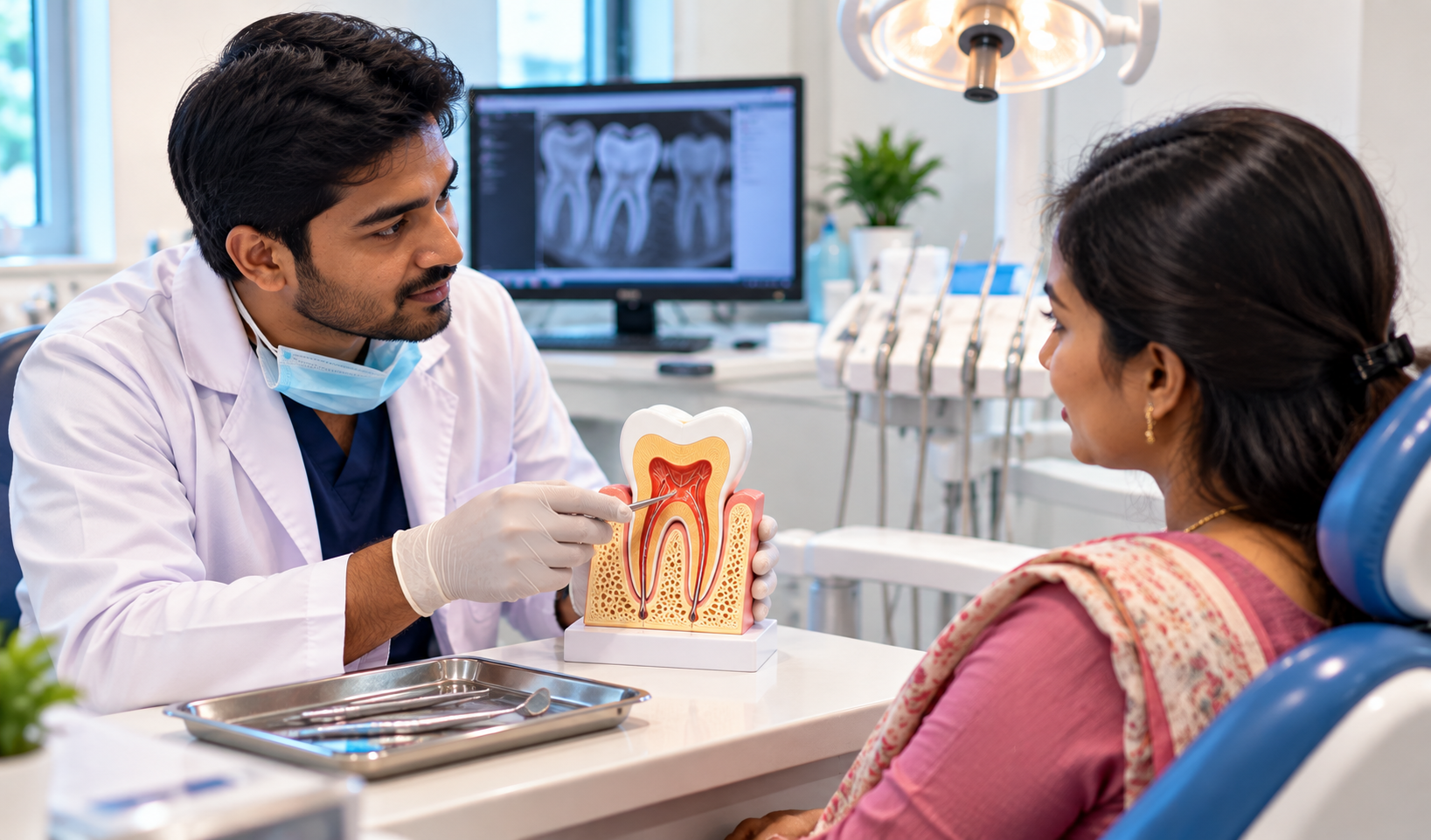
How Long Does Recovery Take After Root Canal Treatment?
Some tenderness around the treated tooth may occur after the procedure. Recovery depends on the initial condition of the tooth, the complexity of treatment and individual healing.
To care for your tooth after treatment:
Root canal treatment does not remove the need for ongoing oral care. An appropriate final restoration and regular dental reviews help protect the treated tooth.
How to Compare Root Canal Treatment Prices in Johor Bahru
When comparing dental clinics, look beyond the initial advertised fee. A lower starting price may not include every procedure required to complete treatment.
Before booking, ask these questions:
Comparing quotations on the same basis helps you understand the treatment plan and expected expense before proceeding.
Root Canal Treatment at Asiaa Dental Clinic, Johor Bahru
If you are searching for root canal treatment in Johor Bahru, Asiaa Dental Clinic can be contacted to enquire about the available treatment options.
A dental assessment can help determine whether root canal treatment is suitable and whether a resident dentist or specialist approach is appropriate for your case. The clinic can also clarify the applicable fees and any additional restoration costs.
Clinic: Asiaa Dental Clinic
Address: 113-A, Jalan Perisai, Taman Sri Tebrau, 80050 Johor Bahru, Johor, Malaysia.
Opening hours: Monday to Sunday, 9 am–9 pm.
Contact: +60 11-1128 2357.
For further information, visit the Root Canal Treatment service page at Asiaa Dental Clinic.
Enquire About Root Canal Treatment Price
Contact Asiaa Dental Clinic to discuss your symptoms, ask about appointment availability and request an individual treatment estimate. Confirm whether the quotation includes the recommended final restoration.
Frequently Asked Questions
How much does root canal treatment cost in Johor Bahru?
The supplied indicative price range for treatment by a resident dentist is RM1,000–RM2,200, while treatment by a specialist is RM1,800–RM3,600. Confirm the current fees and inclusions directly with Asiaa Dental Clinic.
What is the difference between resident dentist and specialist root canal treatment?
A general dental practitioner may manage many routine root canal cases, while a dentist with specialist training in endodontics may be appropriate for selected complex cases. The right provider depends on the clinical findings and treatment requirements.
Is a dental crown included in the root canal treatment price?
Why can root canal treatment for a molar cost more?
Molars often have multiple roots and canals, which can make treatment more complex. The actual cost depends on the tooth's anatomy, condition and the procedures required.
How many appointments are needed for root canal treatment?
Some cases can be completed in one appointment, while others require multiple visits. The number depends on the condition of the tooth, treatment complexity and the dentist's plan.
Is root canal treatment painful?
Local anaesthesia is commonly used to numb the area during treatment. Some tenderness may occur afterwards. Contact your dentist if pain is severe, persistent or worsening.
Can a tooth survive without a crown after root canal treatment?
Some treated teeth can be restored with a filling or another restoration, while others benefit from a crown for additional protection. The decision depends on the remaining tooth structure, tooth position and bite forces.
Is root canal treatment better than extraction?
Root canal treatment may preserve a natural tooth when it can be treated and restored successfully. Extraction may be necessary when the tooth cannot be predictably restored. Your dentist can explain the suitable options for your case.
Does dental insurance cover root canal treatment?
Coverage depends on your insurance policy, exclusions, annual limits and approval requirements. Check with your insurer and clinic before treatment to understand any eligible benefits and out-of-pocket costs.
Where can I enquire about root canal treatment prices in Johor Bahru?
You can contact Asiaa Dental Clinic to ask about appointment availability, current treatment fees and the estimated total cost, including any required final restoration.
Our Treatments
- Porcelain Veneers
- Composite Veneers
- Scaling and Polishing
- Teeth Whitening
- Veeners Replacement
- Consultation X ray
- Tooth Fillings
- Root Canal Treatment
- Crown and Bridges
- Dentures
- Dental implants
- Retainer and Mouth Guard
- Braces
- Wisdom Tooth removal
- Wisdom Tooth Removal Costs
- Veneer Teeth Prices
- Root Canal Prices
Accepted Cards & Wallets